

Introduction
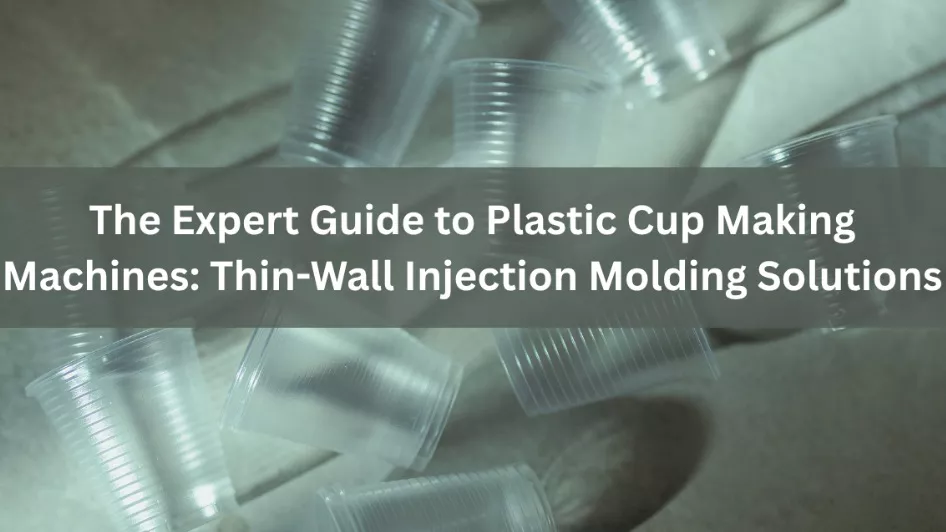
In the highly competitive global food packaging and beverage industries, manufacturing thin-wall plastic cups (such as disposable PP tea cups, milk tea cups, and lightweight airline cups) is a game of milliseconds and micrometers. With wall thicknesses frequently dropping below 0.5mm to reduce material costs and minimize environmental impact, standard plastic injection equipment is no longer viable.
For high-volume plastic packaging manufacturers, utilizing a standard injection molding machine for thin-wall cups results in slow cycle times, high reject rates, and incomplete mold filling (short shots) due to premature plastic solidification. Surviving and thriving in this high-volume, low-margin sector requires transitioning to a dedicated, high-speed plastic cup making machine engineered specifically for thin-wall injection molding.
Key Industry Directive: In thin-wall packaging, speed is not just about throughput—it is about thermal dynamics. The melt must be injected into the mold cavity so rapidly that it fully packs the space before the cold mold walls freeze the flowing plastic.
What Makes a Great Cup Machine?
To the untrained eye, all injection molding machines look similar. However, the internal engineering of a dedicated thin-wall plastic cup making machine is radically different. To withstand the immense physical pressures of rapid-cycle packaging production, several technical metrics must be meticulously optimized:
1. High Injection Speed and Instantaneous Response
Thin-wall products require extremely fast injection speeds, often ranging from 300mm/s to over 800mm/s. To achieve this, high-performance machines utilize specialized hydraulic accumulators to store energy and release it in a massive, instantaneous burst, driving the screw forward at ultra-high velocities.
2. High Clamping Force and Platen Rigidity
When high-pressure molten plastic is injected at extreme speeds, it exerts a massive expansion force inside the mold cavity. To prevent the mold from flexing—which causes “flashing” (excess plastic spilling over the edges)—the clamping unit must be incredibly rigid. This requires thickened platens, reinforced rib plates, and high-tensile tie bars designed to withstand continuous, high-tonnage cycling without micro-deformations.
3. Optimized Screw L/D Ratio
The plasticizing screw must melt material rapidly and evenly. For materials typical to cup manufacturing (such as PP, PS, and PET), a screw with a specialized aspect length-to-diameter (L/D) ratio (typically between 20:1 and 22:1) is essential to ensure excellent melt homogeneity and consistent shot-weight control.